
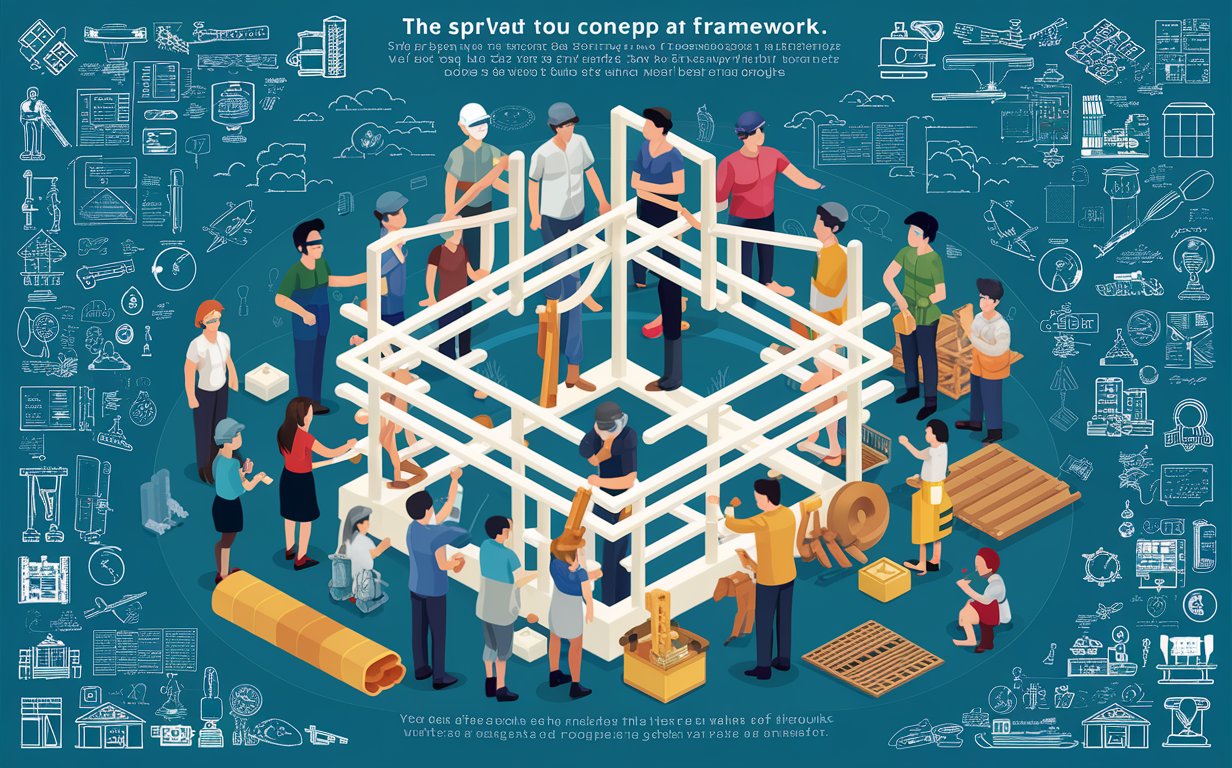
A framework is a structured foundation that simplifies the process of building systems, applications, or strategies by providing predefined tools, rules, and best practices. In modern development and organizational environments, frameworks play a critical role in reducing complexity, improving consistency, and accelerating productivity. Instead of starting from scratch, developers and businesses rely on frameworks to handle common problems, allowing them to focus on innovation and customization rather than repetitive groundwork. The concept of a framework extends beyond software development and can be applied to business models, project management, education, and strategic planning, making it one of the most versatile and valuable tools in today’s digital and professional landscape.
Understanding the Concept of a Framework
At its core, a framework is a reusable structure designed to support the development of systems or processes. In software development, a framework provides a set of libraries, conventions, and tools that guide how applications are built and organized. This structure ensures that developers follow consistent patterns, which improves code readability, maintainability, and collaboration across teams. Unlike a library, which simply offers functions that developers call, a framework dictates the overall flow of an application, enforcing architectural decisions that lead to more stable and scalable solutions. This concept is often referred to as “inversion of control,” where the framework controls the execution flow rather than the developer managing everything manually.
Types of Frameworks
Frameworks exist in many forms, each designed to address specific needs and industries. In software development, common types include web development frameworks, mobile application frameworks, backend frameworks, frontend frameworks, and full-stack frameworks. Web frameworks help streamline the creation of websites and web applications by handling routing, database interaction, and security concerns. Frontend frameworks focus on user interfaces and user experience, while backend frameworks manage server-side logic, data processing, and application performance. Beyond technology, business frameworks such as strategic frameworks or management frameworks help organizations analyze problems, plan growth, and make data-driven decisions. Each type of framework serves as a blueprint that reduces uncertainty and promotes efficiency.
Benefits of Using a Framework
One of the most significant advantages of using a framework is efficiency. Frameworks eliminate repetitive tasks by providing ready-made components and standardized workflows, which significantly reduces development time. This efficiency translates into faster product launches and lower development costs. Another major benefit is scalability, as frameworks are designed to handle growth and increasing complexity without requiring complete rewrites. Security is also enhanced, as well-maintained frameworks incorporate tested security practices that protect against common vulnerabilities. Additionally, frameworks improve collaboration by enforcing consistent coding standards, making it easier for teams to work together and onboard new members quickly.
Frameworks in Real-World Applications
Frameworks are widely used across industries to solve real-world problems. In web development, frameworks enable businesses to build responsive, secure, and high-performance websites that can scale with user demand. In enterprise environments, application frameworks support complex systems such as customer relationship management platforms, financial systems, and cloud-based services. Outside of technology, frameworks are used in education to structure learning methodologies, in business to guide strategic planning, and in project management to standardize workflows. The adaptability of frameworks makes them indispensable tools for both technical and non-technical professionals.
How to Choose the Right Framework
Choosing the right framework requires careful evaluation of project requirements, team expertise, scalability needs, and long-term maintenance considerations. Developers should consider factors such as performance, community support, documentation quality, and compatibility with existing systems. Businesses must also evaluate cost implications, security standards, and future growth potential. A well-chosen framework aligns with both short-term goals and long-term strategy, ensuring that the solution remains effective as requirements evolve. Making an informed decision at this stage can prevent technical debt and costly migrations later.
Conclusion
Frameworks are foundational tools that empower developers, businesses, and organizations to build structured, efficient, and scalable solutions. By providing predefined architectures and best practices, frameworks reduce complexity and enable teams to focus on delivering value rather than reinventing core systems. Whether used in software development, business strategy, or organizational planning, frameworks offer consistency, reliability, and adaptability. Understanding what a framework is, how it works, and how to choose the right one is essential for anyone aiming to succeed in today’s fast-paced and technology-driven world.
Frequently Asked Questions (FAQ)
What is the difference between a framework and a library?
A library provides specific functions that developers call when needed, while a framework controls the overall structure and flow of an application, guiding how components interact.
Why are frameworks important in development?
Frameworks improve efficiency, scalability, security, and collaboration by offering standardized tools and architectures that reduce repetitive work.
Are frameworks only used in software development?
No, frameworks are also widely used in business strategy, education, project management, and organizational planning.
How do frameworks improve scalability?
Frameworks are designed with modular architectures that allow systems to grow and adapt without major restructuring.
Can using a framework limit flexibility?
While frameworks impose structure, most modern frameworks are highly customizable, offering flexibility within a well-defined system.
